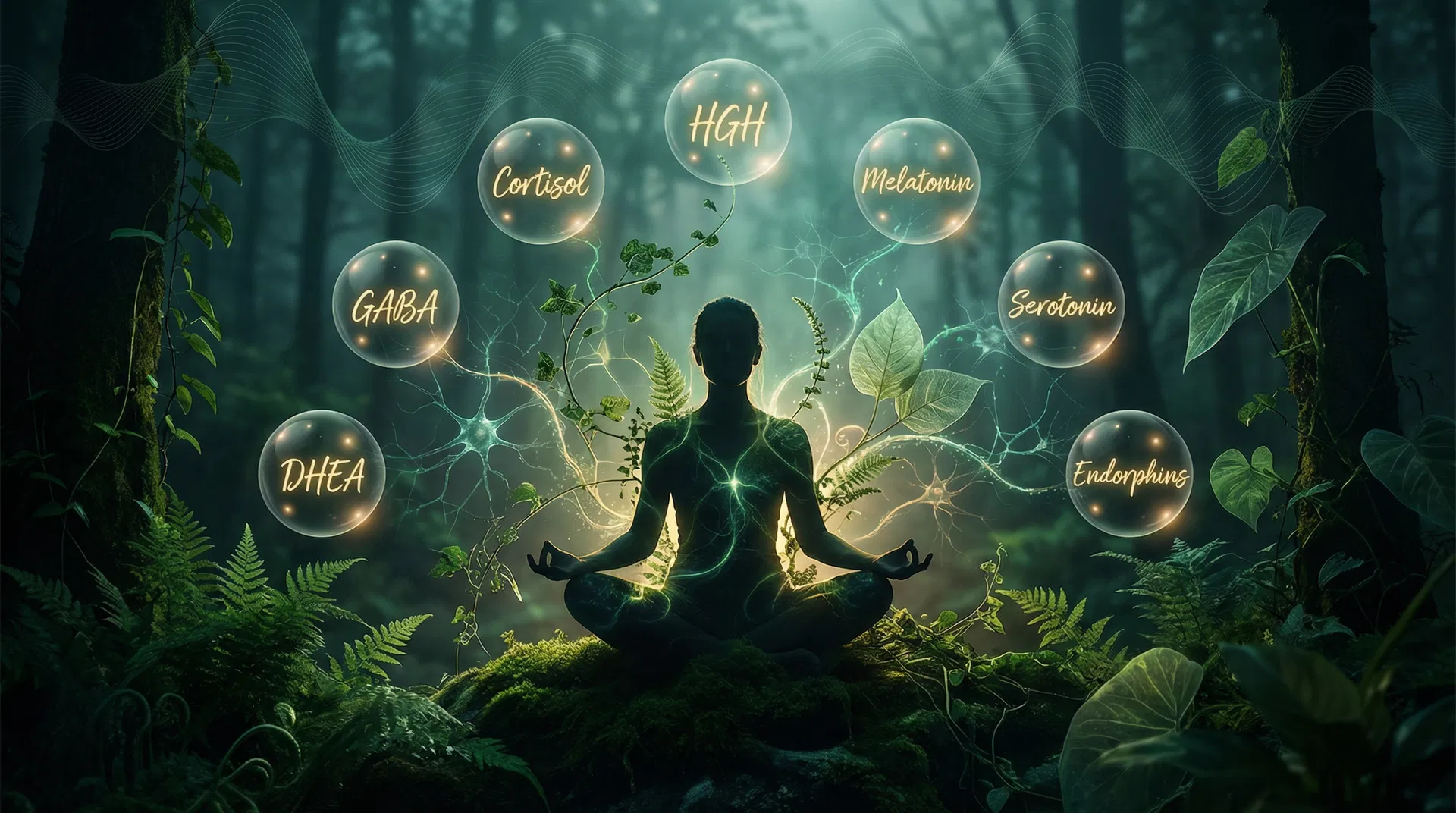
7 Brain Chemicals Boosted by Meditation & Natural Wellness — DHEA, GABA, Cortisol, HGH, Melatonin, Serotonin & Endorphins
The Chemistry of Wellbeing
Your brain is a biochemical orchestra. Every thought, emotion, and physical sensation is shaped by a cascade of hormones, neurotransmitters, and peptides — and the balance of these compounds determines how you feel, how you age, and how resilient you are to stress and disease.
What decades of research now confirm is that meditation, mindfulness, and natural wellness practices are among the most powerful tools available for shifting this chemistry in your favour — without drugs, without side effects, and with benefits that compound over time.
Here is a detailed look at the seven key brain chemicals that change when you commit to a regular wellness practice.
---
1. DHEA — The "Youth Hormone"
DHEA (dehydroepiandrosterone) is often called the "youth hormone" or "mother hormone" because it is the most abundant steroid hormone in the human body and serves as a precursor to both oestrogen and testosterone. DHEA levels peak in your mid-20s and decline by approximately 2% per year thereafter — a decline closely associated with the visible and invisible signs of ageing.
A landmark study by Dr. Vincent Giampapa, former President of the American Board of Anti-Aging Medicine, found that meditation increased DHEA levels by an average of 43.77% in participants. This is a remarkable figure — no pharmaceutical intervention has produced comparable results without significant side effects.
Higher DHEA levels are associated with:
For those using phototherapy patches or molecular hydrogen, the DHEA connection is particularly relevant: both practices support the cellular environment in which DHEA synthesis occurs, potentially amplifying the effects of a regular meditation practice.
---
2. GABA — The Brain's Natural Tranquiliser
GABA (gamma-aminobutyric acid) is the primary inhibitory neurotransmitter in the central nervous system. Its function is essentially to slow down neural activity — creating a sense of calm, reducing anxiety, and promoting restful sleep. Low GABA levels are associated with anxiety disorders, insomnia, and chronic stress.
A study published in the *Journal of Alternative and Complementary Medicine* found that a single 60-minute yoga session increased GABA levels by 27% compared to a control group who spent the same time reading. Meditation produces comparable results through a different but related pathway: by activating the parasympathetic nervous system (the "rest and digest" response), meditation directly stimulates GABA production.
The practical implications are significant. Rather than reaching for pharmaceutical GABA modulators — which carry dependency risks and side effects — a consistent meditation practice offers a natural, sustainable pathway to the same biochemical state.
---
3. Cortisol — Taming the Stress Hormone
Cortisol is the body's primary stress hormone, produced by the adrenal glands in response to perceived threats. In short bursts, cortisol is essential — it mobilises energy, sharpens focus, and prepares the body for action. But chronically elevated cortisol is one of the most damaging conditions a body can experience.
Chronic cortisol elevation is linked to:
The research on meditation and cortisol is among the most robust in the field. A meta-analysis of 45 randomised controlled trials, published in *Health Psychology Review*, found that mindfulness-based interventions produced significant reductions in cortisol levels across diverse populations — with effects that persisted for months after the intervention ended.
For those using molecular hydrogen, the cortisol connection is particularly noteworthy: oxidative stress and cortisol exist in a reinforcing cycle — each elevates the other. By reducing oxidative stress at the cellular level, hydrogen supplementation may help break this cycle, making the cortisol-lowering effects of meditation more accessible and more durable.
---
4. HGH — Human Growth Hormone
Human Growth Hormone (HGH) is produced by the pituitary gland and plays a central role in tissue repair, muscle growth, fat metabolism, and cellular regeneration. Like DHEA, HGH levels decline significantly with age — a process often referred to as "somatopause." By age 60, most people produce only 20–25% of the HGH they produced at age 20.
Dr. Giampapa's research found that meditation increased HGH levels by an average of 87% in participants — a finding that, if replicated consistently, would represent one of the most significant anti-ageing interventions ever documented.
HGH is released primarily during deep sleep — particularly during slow-wave sleep (stages 3 and 4). Meditation improves sleep architecture, increasing the proportion of deep sleep and thereby amplifying natural HGH release. This creates a virtuous cycle: better meditation → deeper sleep → more HGH → better cellular repair → more energy and resilience → easier, deeper meditation.
For those using the X39 phototherapy patch, which is designed to support cellular renewal and GHK-Cu peptide production, the HGH connection is directly relevant: GHK-Cu and HGH work through complementary pathways to support tissue repair and regeneration.
---
5. Melatonin — The Master Sleep Regulator
Melatonin is produced by the pineal gland in response to darkness and is the primary regulator of the sleep-wake cycle. Beyond its role in sleep, melatonin is a powerful antioxidant — one of the few antioxidants that can cross the blood-brain barrier — and plays important roles in immune function, cancer prevention, and neuroprotection.
Dr. Giampapa's research found that meditation increased melatonin levels by an average of 98% — nearly doubling melatonin production in participants. This is consistent with what is known about meditation's effects on the autonomic nervous system: by activating the parasympathetic response and reducing sympathetic arousal, meditation creates the physiological conditions most conducive to melatonin synthesis.
The implications extend beyond sleep quality. Higher melatonin levels are associated with:
---
6. Serotonin — The Mood and Meaning Molecule
Serotonin is perhaps the most widely recognised neurotransmitter — the molecule most commonly associated with mood, wellbeing, and the sense that life is meaningful and worthwhile. Approximately 90% of the body's serotonin is produced in the gut, with the remaining 10% in the brain — a fact that underscores the importance of gut health in mental wellbeing.
Meditation increases serotonin through multiple pathways:
A study published in *Psychosomatic Medicine* found that experienced meditators had significantly higher levels of 5-HIAA (a serotonin metabolite) in their urine compared to non-meditators — indicating chronically elevated serotonin production.
For those dealing with low mood, anxiety, or the general flatness that often accompanies modern life, the serotonin-boosting effects of meditation offer a compelling, side-effect-free alternative to pharmaceutical interventions.
---
7. Endorphins — The Body's Natural Painkillers
Endorphins are endogenous opioid peptides produced by the pituitary gland and hypothalamus. They bind to the same receptors as opioid drugs — producing feelings of euphoria, pain relief, and deep wellbeing — but without the addictive potential or side effects.
Meditation, particularly loving-kindness meditation and body-scan practices, has been shown to increase endorphin release. A study published in *NeuroReport* found that meditation produced measurable increases in beta-endorphin levels — the same compound responsible for the "runner's high" experienced during intense exercise.
Endorphins also play important roles in:
---
The Compound Effect: Why All Seven Matter Together
What makes this picture so compelling is not any single chemical in isolation, but the way these seven compounds interact as a system. When cortisol drops, DHEA and serotonin rise. When melatonin increases, HGH follows. When GABA calms the nervous system, endorphins flow more freely.
A consistent wellness practice — meditation, natural supplementation, phototherapy, molecular hydrogen — does not just tweak one variable. It shifts the entire biochemical environment of the body toward a state of repair, resilience, and renewal.
The research is clear. The question is simply whether you are willing to invest the time and attention to let these changes happen.
---
How EcoVitality Products Support This Chemistry
The X39 phototherapy patch and molecular hydrogen tablets are designed to work with — not instead of — the body's natural biochemical systems. The X39 supports GHK-Cu production and cellular renewal; hydrogen tablets reduce oxidative stress and support mitochondrial function. Both create a cellular environment in which the brain chemistry shifts described above can occur more readily and more durably.
Combined with a regular meditation or mindfulness practice, these tools form a comprehensive natural wellness protocol — addressing cellular health from the outside in (phototherapy), from the inside out (hydrogen), and from the mind down (meditation).
*Source: EOC Institute — Research on Meditation and Brain Chemistry. [eocinstitute.org](https://eocinstitute.org/meditation/dhea_gaba_cortisol_hgh_melatonin_serotonin_endorphins/)*
---
*Disclaimer: This article is for educational and informational purposes only. The statistics cited are drawn from the referenced research sources and are not intended as medical advice. Individual results vary. Always consult a qualified healthcare professional before making changes to your health regimen. EcoVitality Club products are general wellness products and are not intended to diagnose, treat, cure, or prevent any disease.*
7 Brain Chemicals Transformed by Meditation & Natural Wellness
Ready to Start Your Wellness Journey?
Free shipping within Australia. 30-day satisfaction guarantee. International shipping to NZ, USA & UK.
Related Articles
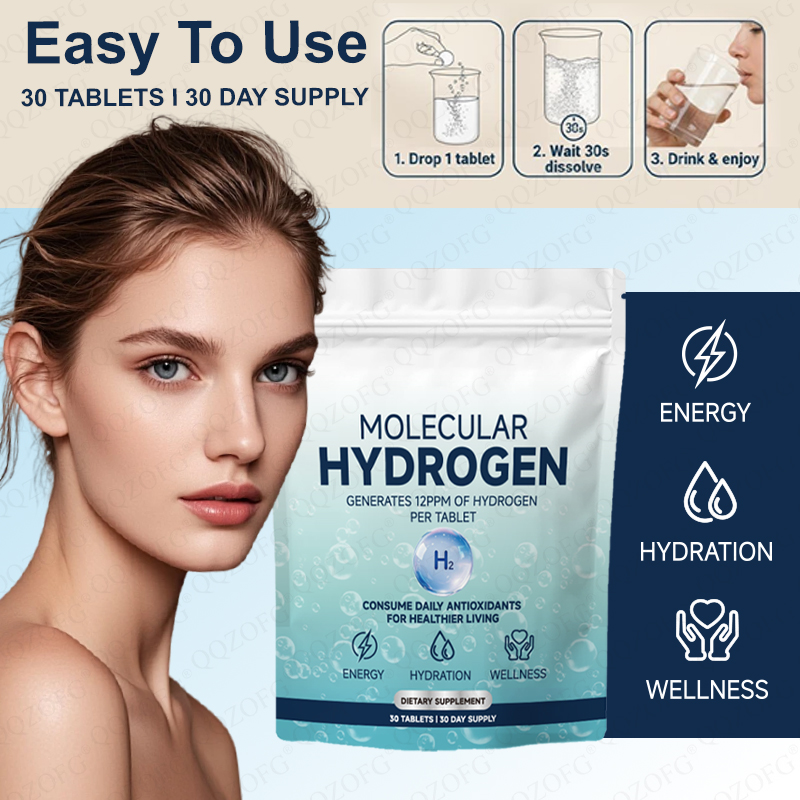
The Molecule That Changed Medicine: What Japanese Research Reveals About Molecular Hydrogen
In 2007, Professor Shigeo Ohta of Nippon Medical School published a landmark study in Nature Medicine that sparked a global revolution in antioxidant science. Here is what over 1,500 peer-reviewed studies have since revealed about molecular hydrogen.
Stem Cell Activation: What the Research Actually Says
The term 'stem cell activation' is used frequently in wellness circles. Here's an honest look at what the peer-reviewed research says about GHK-Cu, phototherapy, and cellular regeneration.